
After the impact of Dune: Part Two, it became clear that Denis Villeneuve isn’t just adapting a sci-fi classic — he’s building a long-form cinematic statement. That’s why Dune: Part Three feels less like “the next movie” and more like a reckoning.
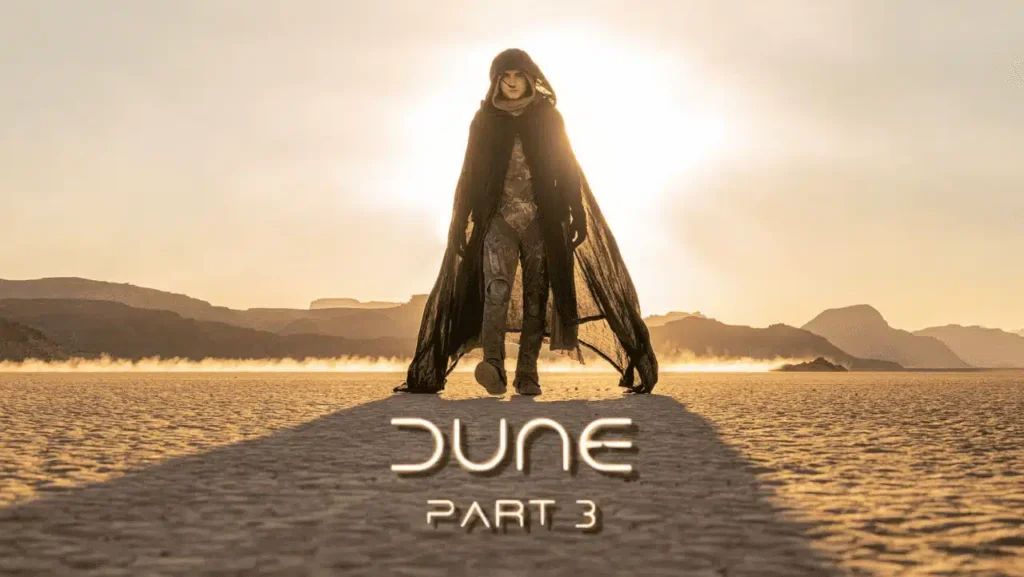
Reading fan discussions online, especially on Reddit, there’s a shared feeling that this chapter will be the most challenging one yet. Not bigger. Not louder. Just heavier.
And honestly, that’s exactly what I’m hoping for.
Why Part Three feels fundamentally different
The first two films were about rise and momentum. Power gathering. Faith forming. Myth being constructed.
Dune: Part Three is expected to be about consequences.
Fans often point out that this is where the story stops romanticizing destiny and starts interrogating it. The hero narrative begins to crack, and what’s left underneath is far more uncomfortable than triumph.
That shift alone makes this film one of the most anticipated sci-fi releases in years.
The Paul Atreides question everyone is asking
Across Reddit threads, one topic dominates everything else:
What does Paul become now?
Up to this point, Paul has been framed as a figure of inevitability — a leader shaped by prophecy, circumstance, and survival. But many fans are expecting Part Three to actively challenge that framing.
Personally, I think this is the most important task of the film.
If Dune is truly about power and its dangers, then Part Three must force the audience to sit with the uncomfortable truth that even “chosen ones” can be destructive.
A darker tone fans are ready for
One thing fans seem surprisingly aligned on is their expectation of a darker, more introspective tone.
People aren’t asking for:
- bigger battles
- constant spectacle
- louder mythology
They’re asking for:
- moral ambiguity
- political consequences
- emotional cost
From my perspective, this is where Villeneuve excels. His restraint is his greatest strength. If Part Three leans into silence, tension, and inevitability rather than action, it could become the most powerful film of the trilogy.
Less heroism, more accountability
A recurring sentiment online is that Dune: Part Three should strip away any remaining sense of heroism.
Fans talk a lot about how refreshing it would be to see:
- a protagonist who doesn’t get absolution
- victories that feel hollow
- a future shaped by regret rather than glory
I agree completely.
This isn’t a story that should end with applause. It should end with reflection.
The political core of Dune finally takes center stage
While the earlier films balanced politics with survival and identity, Part Three is expected to go all-in on power structures.
Reddit discussions frequently mention hopes that the film will explore:
- empire as a machine, not a villain
- religion as a tool of control
- how revolutions devour their own ideals
If the film commits to this, Dune stops being epic sci-fi and becomes something closer to political tragedy — which, in my opinion, is exactly where it belongs.
Villeneuve’s biggest creative risk
One thing I admire deeply about Villeneuve is his refusal to over-explain.
Many fans hope he continues this approach in Part Three — resisting the temptation to simplify themes for mass appeal.
This film doesn’t need:
- a comforting ending
- clear moral winners
- narrative hand-holding
It needs trust. Trust that the audience can handle discomfort, ambiguity, and unresolved tension.
That’s a risky choice — but it’s also what could make Dune: Part Three truly unforgettable.
Why expectations are so high — and so fragile
The first two films set an incredibly high bar. They proved that big-budget sci-fi can be slow, thoughtful, and serious.
Now fans expect:
- the same visual discipline
- the same respect for the source material’s themes
- a conclusion that doesn’t betray the story’s warning
At the same time, there’s a fear that Part Three could soften its message to feel more “complete” or emotionally satisfying.
I really hope it doesn’t.
My personal expectation
I don’t want Dune: Part Three to make me feel good.
I want it to make me uncomfortable.
If this film succeeds, it won’t be because it ends the trilogy cleanly — but because it forces the audience to question everything they cheered for in the previous films.
That kind of ending takes courage. And Villeneuve has shown, time and again, that he’s willing to take that risk.
Where to watch Dune
The first two Dune films are available on Max.
Production details and updates about Dune: Part Three can be found on the film’s IMDb page.
Final thoughts
Dune: Part Three isn’t about finishing a story. It’s about exposing the cost of believing in destiny.
Based on fan sentiment and my own expectations, this film matters because it represents a rare opportunity: a blockbuster willing to critique the very idea of heroic power.
If it stays true to that idea, Dune won’t just end as a great trilogy.
It will end as a warning.