A brilliant city tool with a very narrow brief
The CE 02 combines instant electric response, a low seat and striking design—but its 95 km claimed range and premium price make route planning more important than style.
Current SA price guide: from R162,900
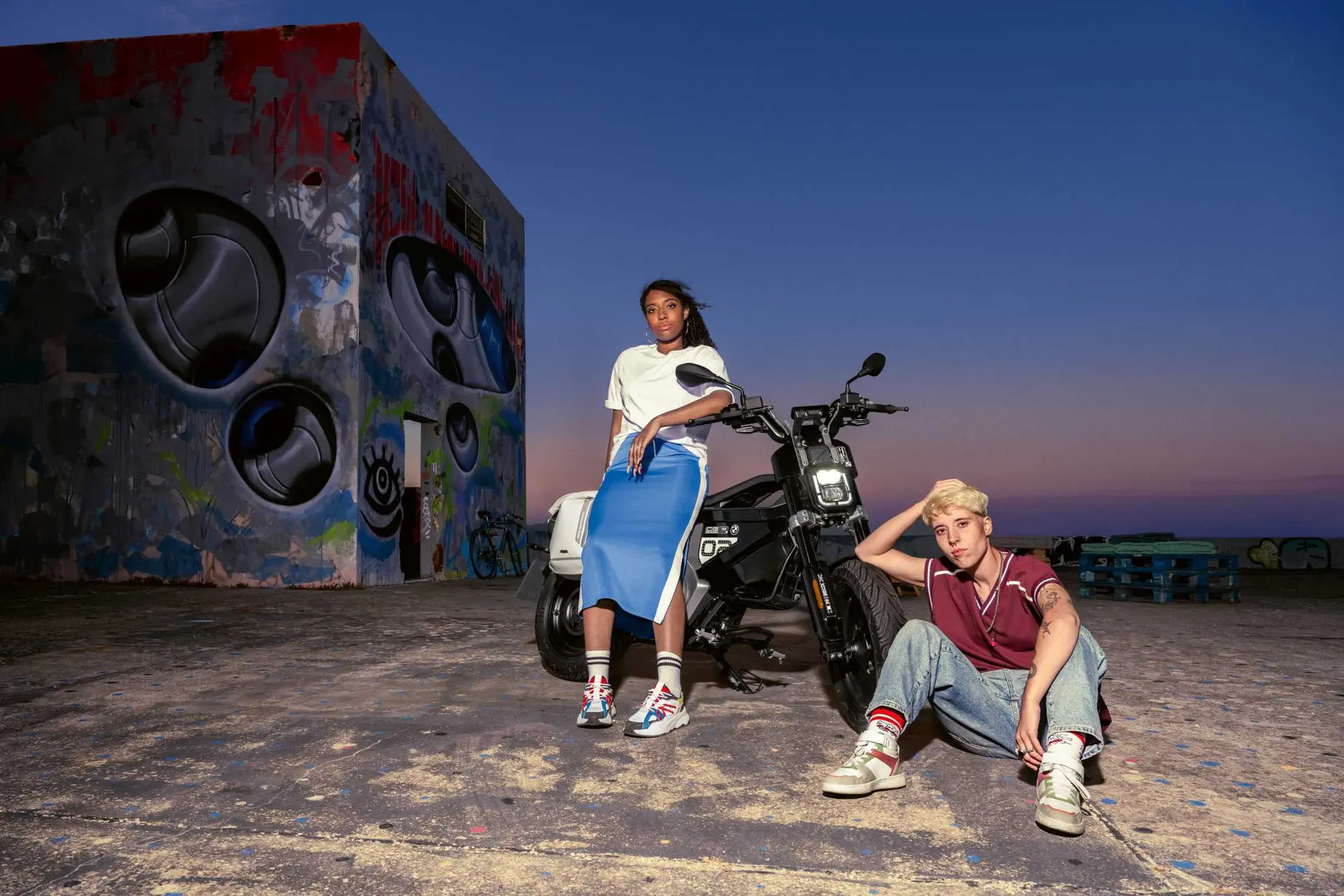
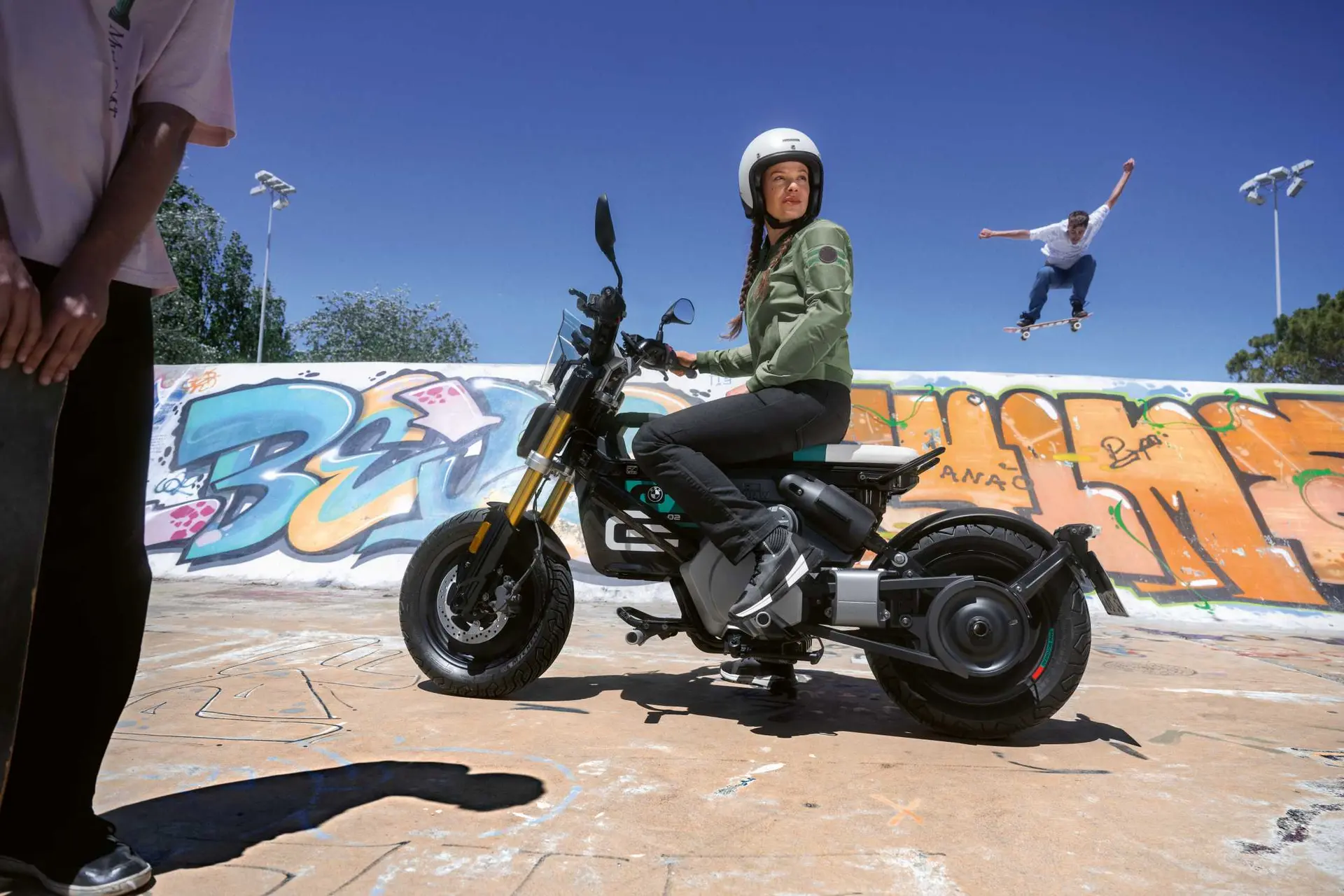
Official BMW Group image. Highline equipment and accessories may be shown.
Want to win a BMW CE 02?
See the two official entry routes and the live finalist challenge.
The BMW CE 02 is at its best as a second vehicle for short, repeatable urban trips. It is light by motorcycle standards, quick from traffic lights, simple to charge from a household socket and far more distinctive than a conventional commuter. It is not a cheap substitute for a petrol scooter: at roughly R162,900, it asks buyers to accept limited range, almost no built-in weather protection and little standard luggage capacity.
Urban riders with secure home charging whose daily return trip is comfortably below the claimed 95 km range and who value compact size, electric response and design more than touring ability.
Reviewed: September 2026. This buyer review uses official specifications and current South African market data; price, equipment and availability can change without notice.
What exactly is the BMW CE 02?
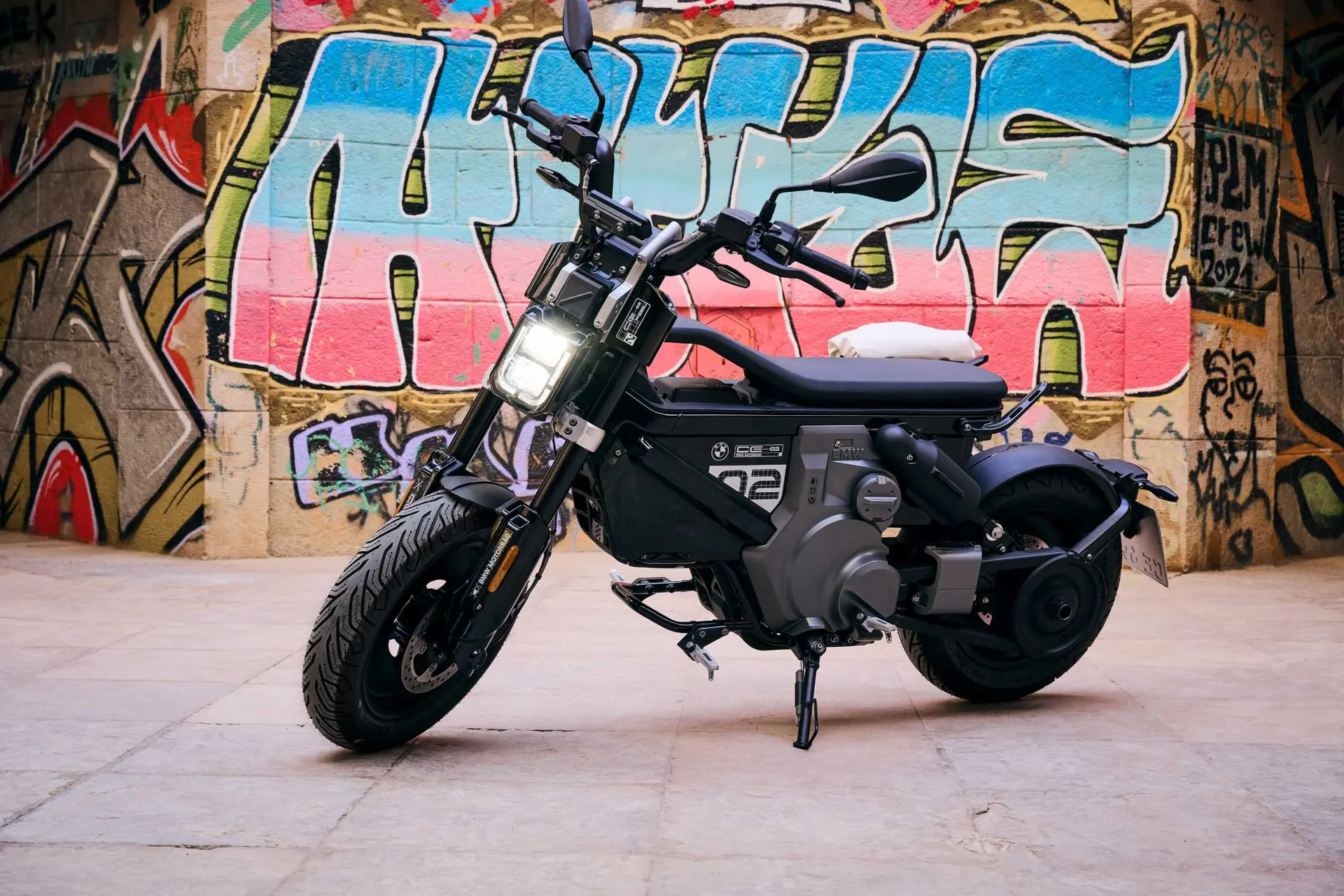
BMW calls the CE 02 an “eParkourer” rather than a scooter or conventional motorcycle. The label is marketing, but the product really is unusual: a long flat seat sits over a compact 48-volt electric drivetrain, wide 14-inch wheels and a steel double-loop frame. There is no clutch or gearbox to manage, and the toothed-belt final drive removes much of the routine mess associated with a chain.
The South African buyer’s-guide price is currently listed from R162,900. That places the CE 02 almost level with BMW’s petrol C 400 X and C 400 GT scooters, which are faster, carry more luggage and travel much farther between stops. The CE 02 therefore wins on compactness, quiet operation and character—not on conventional value or versatility.
What the CE 02 gets right
- Strong response to 50 km/h and effortless twist-and-go operation
- Low 750 mm seat and manageable 132 kg road-ready weight
- Household-socket charging without a dedicated wallbox
- ASC, recuperation control, reverse assist and Keyless Ride
- Distinctive design with a low-maintenance belt final drive
What buyers must accept
- R162,900 is expensive for such a focused urban machine
- Claimed 95 km range leaves limited margin for detours
- 95 km/h top speed is not suited to sustained freeway use
- No meaningful built-in weather protection or large storage bay
- BMW Motorrad ABS operates on the front wheel only
Power and performance: quick where the city needs it
The air-cooled synchronous motor produces 6 kW of rated output, 11 kW maximum output and 55 Nm of torque. BMW claims 0–50 km/h in 3.0 seconds and a maximum speed of 95 km/h. Those numbers explain the CE 02’s character: it should leave traffic lights sharply and feel responsive in 40–80 km/h urban traffic, but it is not designed for long-distance high-speed work.
There is no gear selection and no clutch lever. The right grip controls drive, while regenerative deceleration returns some energy to the batteries when the rider rolls off. A reverse assistant helps when manoeuvring the bike, useful even at 132 kg when a parking space slopes the wrong way.
Range: treat 95 km as a laboratory benchmark
BMW quotes up to 95 km according to the WMTC test cycle from two 1.96 kWh usable battery modules, giving 3.92 kWh of usable capacity. Real-world range changes with speed, rider and passenger mass, hills, tyre pressure, temperature, wind and how aggressively the bike accelerates. Sustained high speed usually consumes energy much faster than stop-start urban riding with regeneration opportunities.
A sensible owner should not design a daily routine that requires every claimed kilometre. A 35–55 km return commute leaves a useful margin for a detour, headwind, battery ageing or a missed charge. A regular 80–90 km day may be possible under favourable conditions, but it turns every variable into a range decision.
Charging: easy at home, awkward without a socket
The standard external charger delivers 0.9 kW from a normal 230-volt household socket. The optional 1.5 kW quick charger is included with the Highline package in some markets and is also offered as an accessory; BMW quotes 1 hour 40 minutes for a 20–80% charge with it. Confirm exactly which charger is supplied with the South African quotation because package content can change.
The small battery is the advantage. It does not need a dedicated AC wallbox, and a full usable battery represents only 3.92 kWh before charging losses. To estimate one charge, multiply the energy drawn from the wall by your municipal or prepaid electricity tariff. The actual wall figure will be higher than usable battery capacity because no charging system is 100% efficient.
City use: low, light and easy to place
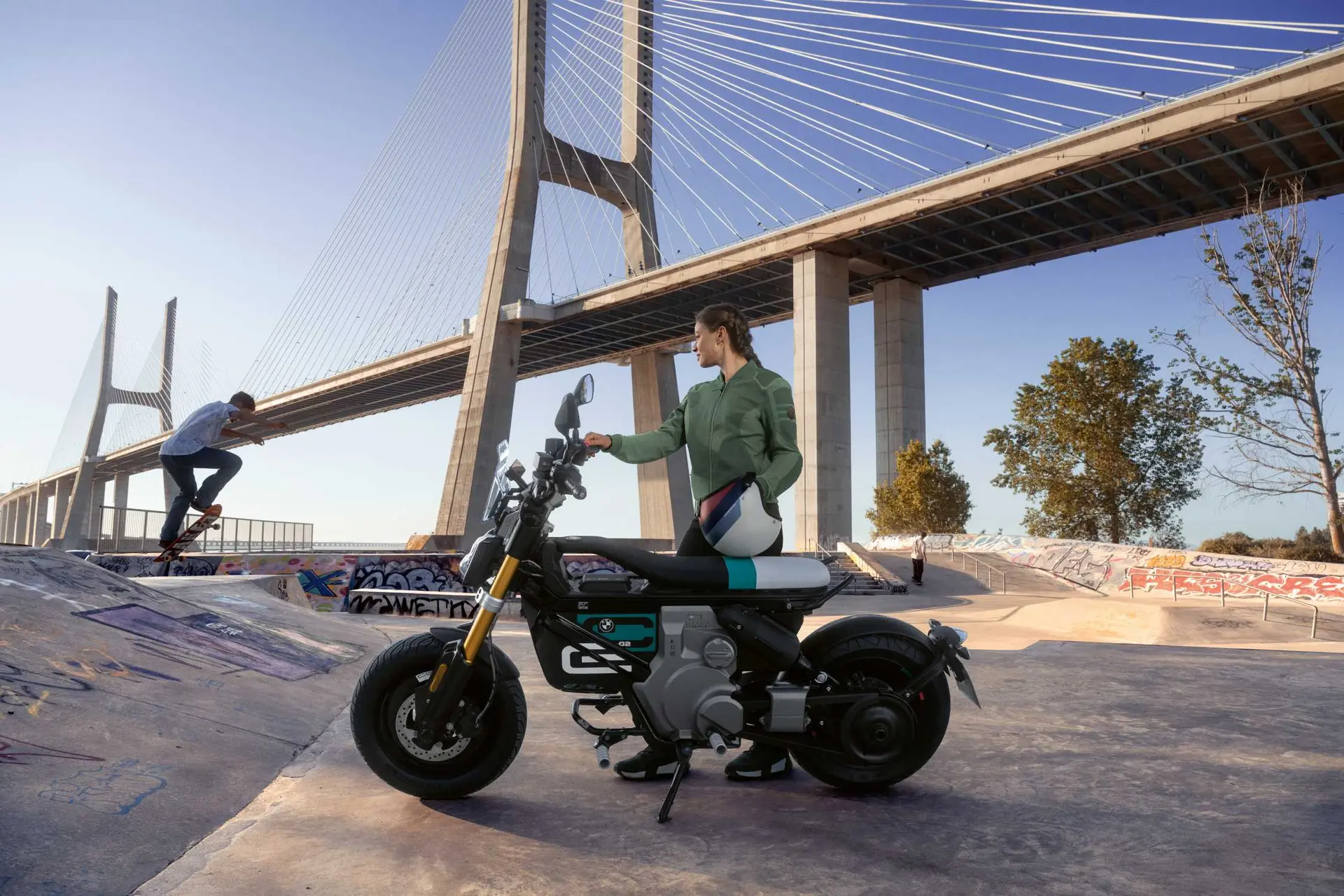
A 750 mm seat is lower than most full-size motorcycles, and the mass sits low in the chassis. Those numbers should make the CE 02 approachable for riders who find tall adventure bikes intimidating. The wide tyres and short proportions suit tight traffic, parking garages and short errands, while Keyless Ride removes another step from frequent stops.
The trade-off is exposure. There is no large screen, bodywork or under-seat storage comparable with a maxi-scooter. A backpack solves some errands but transfers weight to the rider; BMW accessories can add carrying options, yet they also raise the final price. Anyone commuting through winter rain or at highway speed should test wind protection before assuming the futuristic design is practical.
Riding modes and everyday technology
Flow and Surf modes are standard. Flow is configured for relaxed urban progress and stronger energy recovery, while Surf allows more coasting and a more direct riding feel. The optional Highline package adds Flash, a sportier mode with stronger acceleration response and maximum recuperation, along with equipment such as the 1.5 kW charger, heated grips and smartphone integration features depending on local specification.
A 3.5-inch micro TFT shows speed, charge and riding information. The standard USB-C socket can power a phone, and BMW’s Connected app can show charging information. Highline’s cradle mode uses a mounted smartphone as an additional display. It is functional, but buyers expecting the CE 04’s large integrated colour screen should compare both systems in person.
Chassis, brakes and the licence question
The CE 02 uses a tubular-steel double-loop frame, a telescopic front fork, single-sided rear swingarm and hydraulic disc brakes at both ends. BMW specifies ABS on the front wheel, plus Automatic Stability Control (ASC) and Recuperative Stability Control (RSC). RSC is designed to control excessive rear-wheel slip caused by regenerative deceleration on a low-grip surface.
LED lighting, daytime running lights, Keyless Ride and an anti-theft-alarm preparation are included in the product specification. The unusual silhouette can improve conspicuity, but quiet electric operation also means pedestrians may not hear the vehicle approaching. Defensive speed and lane positioning remain essential.
The full-power CE 02 is a road-going motor vehicle, not an electric bicycle. BMW’s overseas licence references do not automatically map to South African rules. Confirm the required motorcycle licence category, registration, insurance and rider-equipment obligations with the dealer and the relevant South African authority before purchase.
Key dimensions and specification
Ownership: calculate the whole use case
Energy cost per kilometre should be low, and the belt drive removes chain cleaning and lubrication. There is also no engine oil, spark plug or exhaust system. Electric does not mean maintenance-free: tyres, brakes, suspension, bearings, belt condition, software and the 12-volt electrical system still need inspection, while battery repairs can be expensive outside warranty.
Ask the dealer for the motorcycle warranty, high-voltage battery warranty, capacity-retention terms and charger warranty in writing. Confirm what happens if a battery module, charger or control unit fails outside your home city, and whether roadside assistance transports an electric motorcycle to an authorised BMW Motorrad workshop.
Insurance and physical security deserve equal attention. Quote the CE 02 before purchase, disclose accessories and confirm cover for the external charger. Secure the bike to a fixed point at home, use layered tracking and locking, and do not assume Keyless Ride or an alarm preparation replaces physical theft prevention.
BMW CE 02 versus its closest urban alternatives
There is no direct electric equivalent at the same price in BMW’s South African range. The most useful comparison is therefore with BMW’s own urban products: two similarly priced petrol scooters that offer greater range and storage, plus the larger CE 04 for riders who want a more complete electric commuter.
| Model | Current SA price context | Power / energy | Range or consumption | Best reason to choose it |
|---|---|---|---|---|
| BMW CE 02 | From about R162,900 | 11 kW max; 3.92 kWh usable | 95 km WMTC | Lightest, lowest and most distinctive option for short repeatable city trips |
| BMW C 400 X | From R160,650 | 25 kW petrol single | 3.5 L/100 km WMTC | Far greater trip flexibility, useful storage and better performance beyond the city |
| BMW C 400 GT | From R168,400 | 25 kW petrol single | 3.5 L/100 km WMTC | Weather protection, comfort and luggage capacity for longer daily travel |
| BMW CE 04 | From R298,550 | 31 kW max; electric | 130 km WMTC | A faster, more protective and more practical premium electric commuter |
Prices checked in September 2026. BMW’s local site currently lists the 2026 C 400 models and the 2027 CE 04; the CE 02 price is from the current 2026 ZA Bikers buyer’s guide. Model years, campaigns, package content and dealer charges can change.
The C 400 X is the uncomfortable comparison for the CE 02: it costs almost the same, makes more than twice the maximum power and is easier to use outside a strict urban radius. The CE 02 earns its place only when home charging, low running energy, smaller mass and electric character matter more than range and storage. The CE 04 is the stronger electric commuter, but at nearly twice the price.
Should you buy the BMW CE 02?
Buy it if you have secure overnight charging, your normal return trip is well within the practical range, and you want a compact electric machine that is easy to approach and genuinely different. It makes the most sense as a second vehicle or a deliberately focused commuter.
Choose something else if you depend on one vehicle, regularly use fast roads, carry luggage, ride in poor weather or cannot charge where the bike is parked. A C 400 X or C 400 GT is more conventional but dramatically more flexible for similar money.
The bottom line: the CE 02 is not trying to win a specification-per-rand contest. It is a stylish, quick and unusually simple answer to a narrow urban problem. If your real routine fits inside that problem, it can be delightful. If the routine changes, the limitations arrive quickly.
The test ride that matters
Start with a full battery, follow the fastest and hilliest part of your actual commute, and note the percentage used—not only the dashboard’s remaining-kilometre estimate. Practise low-speed turns, reverse assist and both standard riding modes. Then repeat the ownership calculation with the exact charger, Highline package, insurance and security equipment included.
BMW Group PressClub South Africa and the BMW Motorrad Centurion specification page — motor, batteries, range, charging, weight, chassis, safety systems and equipment.
ZA Bikers 2026 buyer’s guide — current South African CE 02 RRP reference. Current rival prices and specifications were checked against official BMW Motorrad South Africa pages for the C 400 X, C 400 GT and CE 04.
Analysis is independent and based on published specifications rather than a long-term road test. Confirm final pricing, stock, charger, Highline content, warranty, licence requirements and insurance with the relevant South African dealer and authority.
Explore a verified South African competition featuring a different CE 02 variant.
EXPLORE THE COMPETITIONIntre does not organise this competition. Terms apply.