
The collaboration between Nvidia and Mercedes-Benz is set to transform the automotive industry by integrating advanced AI into self-driving vehicles.
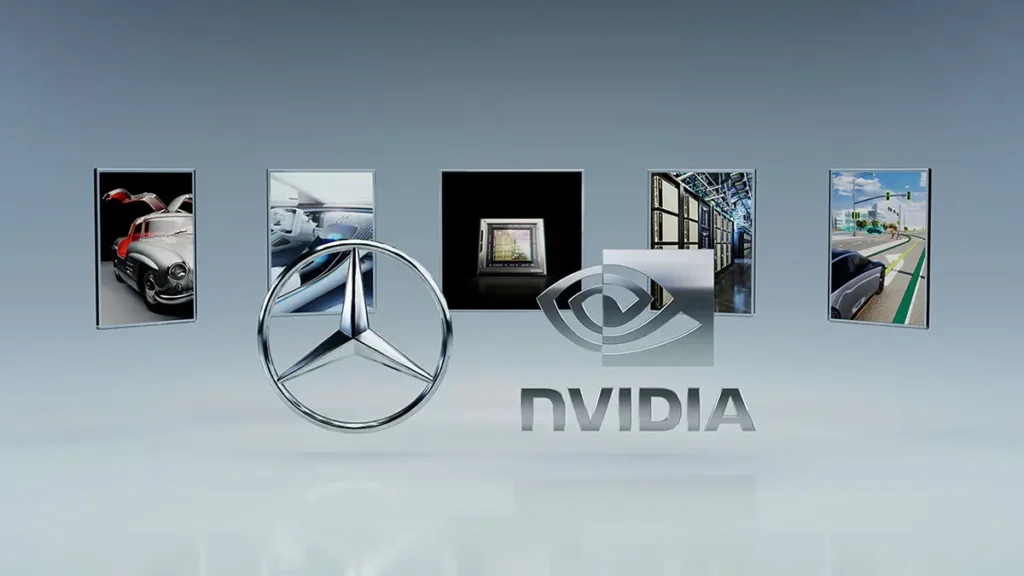
Announced several years ago, this partnership has now reached a pivotal milestone with the debut of cutting-edge technologies in 2026 models. As autonomous driving becomes a reality, this alliance combines Nvidia’s expertise in AI hardware and software with Mercedes-Benz’s legacy in luxury engineering, promising safer, smarter, and more efficient cars on the road.
Background on the Nvidia-Mercedes-Benz Partnership
Nvidia and Mercedes-Benz first announced their strategic partnership in 2020, aiming to develop a new computing architecture for automated driving. Over the years, the collaboration has focused on creating software-defined vehicles that can receive over-the-air updates, enhancing functionality without physical modifications.
In early 2026, at CES, Nvidia CEO Jensen Huang unveiled significant advancements, including the integration of Nvidia’s DRIVE AV software into the all-new Mercedes-Benz CLA. This marks the first commercial deployment of Nvidia’s end-to-end AI stack for autonomous driving in a production vehicle. The partnership emphasizes open-source AI models, such as the newly introduced ‘Alpamayo’ system, which includes datasets and models for reasoning in autonomous vehicles.
Key Technologies Driving the Innovation
The core of this partnership lies in Nvidia’s advanced AI platforms tailored for automotive applications.
Nvidia’s DRIVE Platform and AI Stack
Nvidia’s DRIVE AV uses an AI end-to-end stack for core driving functions, complemented by a parallel classical safety stack built on the Nvidia Halos safety system. The new Rubin platform, highlighted at CES 2026, extends AI capabilities across domains, powering everything from perception to decision-making in vehicles.
Additionally, the Alpamayo open AI models enable advanced reasoning, allowing cars to handle complex urban scenarios with greater accuracy. This open-source approach encourages broader industry adoption and innovation in autonomous driving tech.
Mercedes-Benz’s Implementation in 2026 Models
The 2026 Mercedes-Benz CLA is the flagship vehicle showcasing this technology, equipped with Drive Assist Pro—an automated driving suite featuring 27 sensing devices, including ultrasonic sensors and radars. This system promises hands-free driving in various conditions, transforming city commuting by handling tasks like lane changes, traffic navigation, and parking autonomously.
Mercedes plans to roll out these AI-powered features in the US market starting Q1 2026, with the CLA leading the charge.
Benefits of AI-Advanced Autonomous Cars
This partnership brings numerous advantages to consumers and the industry:
- Enhanced Safety: AI-driven systems reduce human error, with redundant safety stacks ensuring reliability.
- Efficiency and Convenience: Over-the-air updates keep vehicles current, while advanced AI handles complex driving scenarios, freeing drivers for other tasks.
- Scalability: Nvidia’s plans extend to robotaxi fleets by 2027, potentially revolutionizing urban mobility.
- Competitive Edge: Amid rivals like Tesla, this collaboration positions both companies as leaders in AI autonomy.
Future Implications for the Automotive Industry
Looking ahead, the Nvidia-Mercedes-Benz alliance could accelerate the adoption of Level 3 and higher autonomy across vehicle lineups. With open models like Alpamayo, other automakers might integrate similar tech, fostering a more collaborative ecosystem.
As regulations evolve, these AI advancements promise to make self-driving cars mainstream, reducing accidents and emissions while enhancing accessibility.
In conclusion, the Nvidia and Mercedes-Benz partnership is not just about building cars—it’s about redefining mobility with intelligent, AI-powered solutions that pave the way for a autonomous future.